
Repair before replacement
Rotten timber and sash window sill repairs
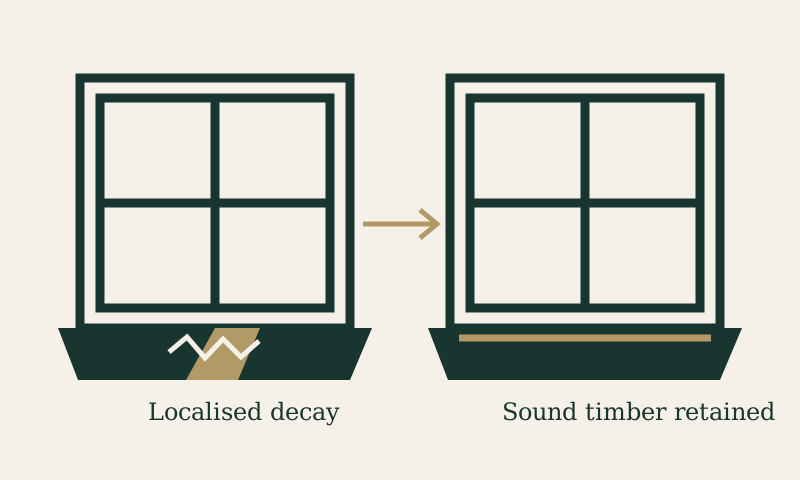
Decay does not automatically mean a complete historic window must be discarded. Careful inspection can separate sound original timber from damaged areas and identify a durable, proportionate repair.
Specialist timber repairs in Stirling
Lower sash rails, sills, pulley stiles and joints are particularly exposed to moisture. Cracked paint, failed putty, blocked drainage and defective perimeter mastic allow water to remain against the timber. Decay can then develop beneath apparently intact coatings.
Our first task is to establish the extent and cause of the damage. Cosmetic filling over damp or friable wood is rarely lasting. We remove timber that has lost its structural integrity, preserve sound material and form new sections with compatible timber and traditional joinery principles.
Common areas of decay
Window sills
End grain, joints and areas beneath the sash can retain moisture when paint and external seals fail.
Bottom rails
Loose glazing putty or open joints can permit water to reach the lower rail and stile ends.
Box-frame feet
The lower ends of the case may deteriorate where masonry remains damp or perimeter seals have failed.
Glazing bars
Slender bars require precise repair to retain the original pane pattern and visual proportions.
Our repair-led approach
- Inspection: coatings and previous fillers are examined and suspect timber is tested.
- Moisture source: failed sand mastic, putty, paint or adjacent masonry defects are identified.
- Local removal: unsound material is cut back to firm timber with repair boundaries chosen for strength and discreet appearance.
- Timber splicing: an accurately formed piece is fitted, bonded and mechanically secured where appropriate.
- Glazing and finishing: putty, primers and compatible external coatings protect the completed work.
- Operation check: sashes, cords, beads and ironmongery are adjusted before handover.
Resin repair or timber splice?
Specialist resin can be useful for small, stable defects where enough sound timber remains. Larger losses, weakened joints and load-bearing areas usually require a properly shaped timber repair. We select the method according to the location and extent of decay, not simply the quickest option.
Preventing the decay from returning
A durable repair depends on water management. External putty and glazing, paint, sill falls and masonry junctions all need to shed water. Our external painting service includes careful preparation so new coatings protect rather than conceal the joinery.
Frequently asked questions
Can a rotten sill be repaired without replacing the frame?
Often yes. If the surrounding case is sound, the damaged sill or affected section can frequently be renewed in situ.
How do you know how far the rot extends?
We inspect visually, probe suspect areas and remove failed coatings or filler where necessary. The full scope sometimes becomes clear only after careful opening-up.
When is replacement more sensible?
Replacement may be justified when decay is widespread, essential joints have failed or too little sound material remains for a reliable repair.
Have you found soft or damaged timber?
Early intervention usually preserves more original joinery. Send clear photographs or arrange a survey for a repair-led assessment.
Arrange a free quotation