

RESTORATION
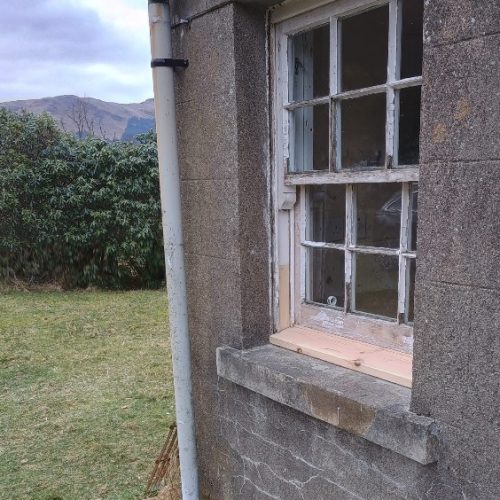
Restoring traditional timber sash and case windows in Scotland is a meticulous process that balances historic preservation with modern performance. Below is a description of the typical stages involved in a high-quality restoration.
1. Dismantling and Site Assessment
The restoration begins with the careful removal of internal baton rods (staff beads) and parting beads to release the sashes from the frame. In many Scottish tenements, “Simplex” hinges are present, allowing the bottom sash to swing inward for easier access. Once the sashes are removed, the old cotton cords are cut, and the internal lead or iron weights are secured. This stage allows specialists to inspect the “case” or outer box for hidden decay, particularly in the pulley stiles and internal linings.
2. Timber Repairs and Splicing
Scottish windows often face severe weather, leading to rot in the cills and the lower sections of the sashes. Restoration involves “surgical” timber repairs, where decayed wood is cut away and replaced with new, preservative-treated timber—typically Scots pine or Douglas Fir to match the original density. Craftsmen use “scarf joints” or resin-based repair systems to ensure a seamless, watertight bond. This approach prioritizes the retention of as much original, slow-grown historic timber as possible rather than replacing the entire unit.
3. Glazing and Puttying
If the original crown or cylinder glass survives, it is carefully protected or salvaged. For upgrades, “slim-profile” double glazing is often installed within the existing timber rebates to maintain the window’s delicate proportions. Specialists remove brittle, cracked putty and replace it with traditional linseed oil putty. This is a critical step for weatherproofing in the Scottish climate, as the putty must be hand-applied to a “sightline” that ensures water sheds effectively away from the timber glazing bars (astragals).
4. Mechanisms and Weight Balancing
Smooth operation is restored by servicing the internal mechanisms. This involves cleaning and oiling the brass pulleys and replacing worn cords with high-quality waxed cotton or polyester-core ropes. Because glass thickness may have changed during restoration, the weights are “re-balanced.” Lead or steel makeweights are added or removed from the internal pockets to ensure the sashes remain stationary at any height and move with minimal effort. This mechanical tuning is essential for the longevity of the window’s hardware.
5. Draught-proofing and Final Finishing
The final stage involves installing discreet draught-proofing systems, typically brush seals integrated into the new beads and meeting rails. This significantly reduces heat loss and eliminates the “rattle” common in older Scottish properties. Externally, the gap between the window frame and the stone “rybat” is sealed using traditional sand mastic—a mixture of burnt sand and linseed oil that remains flexible. Finally, the timber is painted in a specific order to ensure moving parts do not stick, providing a durable, protective finish.